
ADHD Blog
Can ChatGPT Diagnose ADHD? (And Why You Need Specialized AI Instead)
General AI chatbots are great for recipes, but bad at clinical rigor. Here is why you need a structured, clinically-aligned tool to prepare for your diagnosis.
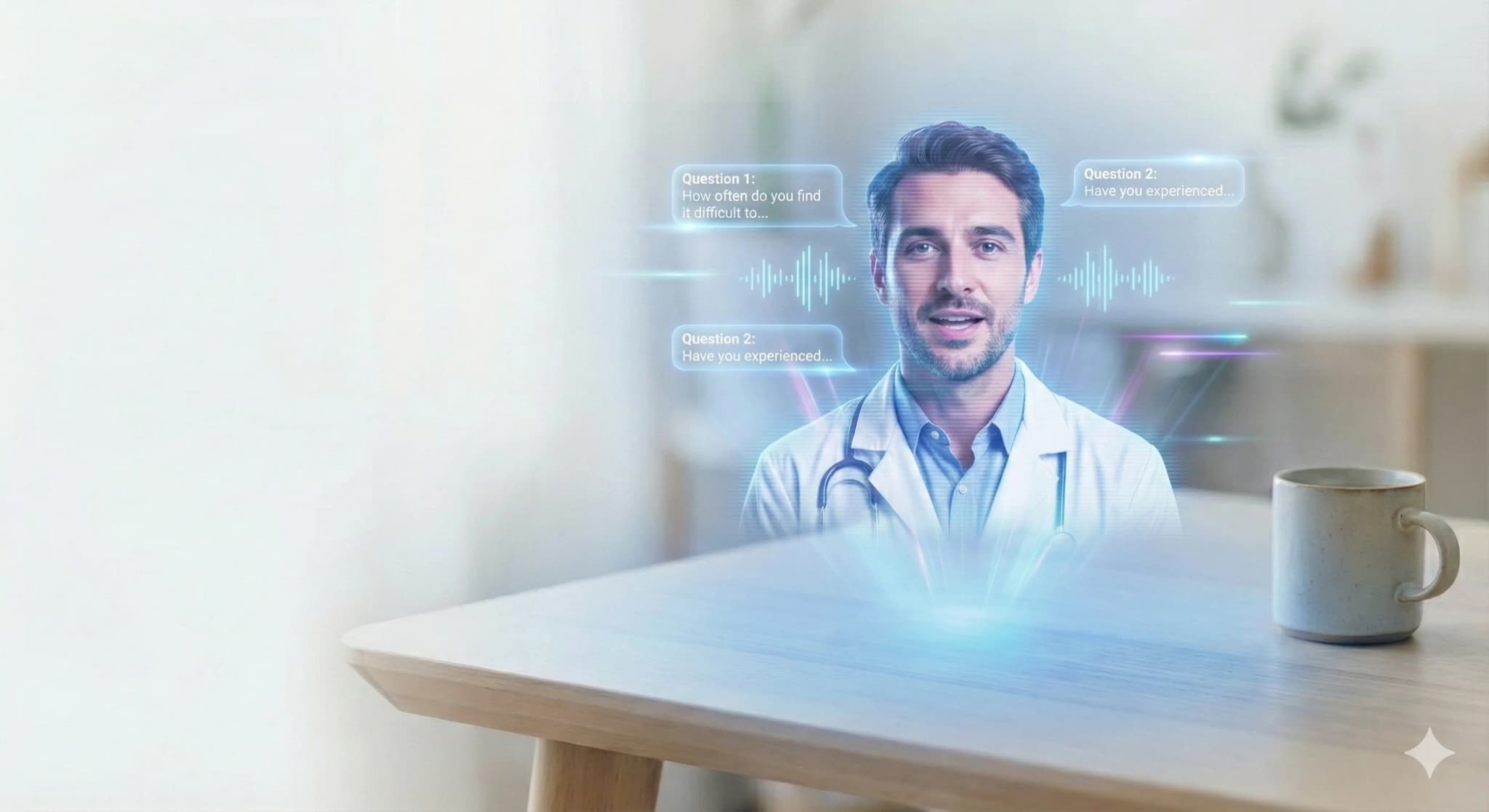
The 'Dr. Google' of the AI era
We have all done it. You type "Do I have ADHD?" or "ADHD symptoms in adults" into ChatGPT. It spits out a polite, bulleted list of generic symptoms: trouble focusing, losing keys, feeling restless.
It feels validating. It feels easy. But it is also dangerously superficial.
General purpose LLMs (Large Language Models) like ChatGPT, Claude, or Gemini are designed to be helpful, conversational, and above all, agreeable. They are people-pleasers. When you tell them you have trouble focusing, they tend to nod along and offer tips. They rarely challenge you, dig for contradictions, or force you to be specific about timelines and impairment.
But a real doctor will. And if you walk into an assessment prepared by a people-pleasing chatbot, you are walking into a trap.
The 'Validation Loop' Problem
Here is the fundamental flaw with using a general chatbot for medical prep: It validates rather than investigates.
If you tell ChatGPT, "I think I have ADHD because I procrastinate," it will say, "Yes, procrastination is a common symptom of ADHD. Here are five ways to manage it."
It feels good. You feel understood. But clinically, this interaction is worthless.
A clinician doesn't want to know that you procrastinate. Everyone procrastinates. A clinician needs to distinguish between pathological executive dysfunction and normal avoidance. They need to know:
"Do you procrastinate on things you enjoy, or just things you hate?" "Does the procrastination lead to severe consequences, like losing a job or failing a class?" "Did you procrastinate like this when you were 7 years old?"*
ChatGPT rarely asks these follow-up questions unless you explicitly tell it to. It assumes your self-report is accurate and moves straight to 'support mode'. This creates a Validation Loop: you feed it a symptom, it validates the symptom, and you leave convinced you have a diagnosis—without ever having your experience stress-tested against actual diagnostic criteria.
Why 'feeling understood' isn't enough
If you walk into a psychiatrist's office and say, "I have trouble focusing," they won't just say "Okay, that sounds like ADHD." They will ask:
"Can you give me a specific example from your childhood?" "How does this impact your job performance reviews?" "Does this happen only when you are anxious, or all the time?" "What were your grades like in elementary school versus high school?"
A general chatbot will rarely push you for this level of detail. It defaults to being a supportive listener, not an investigative clinician. This can leave you with a false sense of preparedness. You might walk into your assessment thinking you have a clear case, only to freeze up when the doctor asks for concrete evidence you haven't thought about in years.
The problem with 'hallucinated' empathy
General AI models are trained on the entire internet—forums, blogs, social media, and medical texts all mixed together. When they talk about ADHD, they often blend clinical criteria with relatable social media memes.
This means you might get "symptoms" that aren't actually part of the diagnostic criteria (like "waiting mode" or "rejection sensitivity") presented as if they are core medical facts. While these are real experiences for many, they aren't what a doctor uses to diagnose you according to the DSM-5 or ICD-11.
Preparing with a general chatbot can mean you spend your valuable appointment time discussing things that, clinically speaking, don't count toward a diagnosis.
Specialized AI: The 'Mean' Clinician You Need
This is why we built the Clinical Readiness Session. It isn't just a wrapper around ChatGPT. It is a specialized system architected to follow the actual diagnostic frameworks used by clinicians in your country (DSM-5 for the US/Canada, NICE guidelines for the UK, etc.).
It is designed to be "meaner" than a chatbot—in a helpful way.
* It demands specifics: If you say "I was a bad student," it will ask "What specifically did your teachers say on your report cards?" * It checks timelines: It ensures you can trace symptoms back to childhood (before age 12), a requirement for diagnosis that many people overlook. * It measures, not just listens: It integrates actual cognitive tests (like Go/No-Go tasks) to measure your reaction time and impulse control, something a text-based chatbot simply cannot do.
Under the Hood: How Our Clinical Engine Works
We didn't just write a prompt that says "act like a doctor." We built a multi-stage clinical engine that enforces medical rigor.
When you enter the Clinical Readiness Session, you aren't just chatting. You are navigating a structured diagnostic tree.
- The Screener Phase: Before the interview even starts, we baseline your symptoms with standardized tools like the ASRS v1.1. This gives the AI a 'heat map' of where to probe.
- The Cognitive Check: You perform interactive tasks—pressing spacebars, inhibiting impulses—that measure your brain's processing speed and inhibition. This data is fed into the interview context.
- The Structured Interview: The AI moves through the DSM-5 or ICD-11 criteria one by one. But crucially, it uses a 'Challenge Protocol'. If your answer is vague, it is programmed not to accept it. It will circle back. It will ask for examples. It will ask, "But isn't that just because you were tired?"
It mimics the skepticism of a trained clinician who has seen it all. It forces you to defend your history. And that is the point. By the time you finish, your answers are bulletproof because they have already been tested.
Structured Output vs. Chat Logs
When you finish a chat with ChatGPT, you have a long, messy transcript. When you finish a Clinical Readiness Session, you get a structured clinical report.
This report organizes your history into the exact categories a doctor looks for:
- Presenting Problems: Why you are seeking help now.
- Developmental History: Evidence from childhood.
- Functional Impairment: How it affects work, school, and relationships.
- Symptom Clusters: Grouping your experiences under Inattentive or Hyperactive/Impulsive criteria.
Doctors love this format because it speaks their language. It turns your chaotic memories into clinical data.
Don't just chat—prepare
AI is a powerful tool for mental health, but the type of AI matters. If you just want to vent or find general tips, a chatbot is great. But if you are preparing for a medical assessment that could change your life, you need a tool that treats the process with the clinical rigor it deserves.
Don't rely on a system built to write poems and debug code to understand your brain. Use a system built for the job.
Ready to explore your ADHD traits?
Take our free ASRS-based ADHD screening to get a structured view of your symptoms before you speak with a professional.